
Maintaining the beauty of your painted walls is essential for creating an inviting atmosphere in your home. Knowing how to properly clean and care for painted walls not only enhances their appearance but also significantly extends their longevity. Regular paint maintenance ensures that your walls remain fresh and vibrant, reducing the frequency of interior house painting. This guide will walk you through effective cleaning techniques, product recommendations, and the various types of paint finishes to help you achieve the best results.
Key Takeaways
- Understanding paint types, like oil-based and latex, influences cleaning methods.
- Flat or matte finishes require gentler cleaning to avoid damage.
- Satin and eggshell paints are durable but should be treated with care.
- High gloss finishes are easy to clean and resistant to moisture.
- Always follow manufacturer instructions when cleaning walls.
- Regular maintenance helps in extending the time between repainting.
Understanding the Importance of Wall Cleaning
Painted walls can quickly accumulate dust, fingerprints, and stains, which detracts from your home’s overall aesthetic. Regular wall cleaning not only enhances the visual appeal but also promotes a healthier living environment. Dust mites and allergens thrive on unclean surfaces, potentially leading to respiratory issues. A proactive approach to wall maintenance can significantly diminish these risks.
It is advisable to engage in wall cleaning techniques at least once a month, allowing for quicker addressing of marks and smudges. Consistent attention to maintaining painted walls can prevent long-term wear and tear, extending the life of the paint. Utilizing effective cleaning products and methods is crucial for ensuring that the walls remain in pristine condition.
You might spend considerable time tidying up walls, especially in rental properties where conditions often leave much to be desired upon arrival. A couple of hours per room can make a significant difference, transforming a space into a welcoming environment. Understanding the right techniques and products for wall cleaning enhances your efficiency and results.
Utilizing homemade cleaning solutions such as warm water mixed with vinegar or ammonia can yield great results. Different paint finishes, such as gloss or semi-gloss, facilitate washing, while flat paints may require a gentler touch. Keep in mind that regular dusting helps in reducing the time needed for thorough cleaning sessions in the future.
Incorporating specialized tools like wall mops and Magic Erasers can significantly improve your cleaning experience. Investing in quality cleaning supplies will make the task more manageable and effective, allowing you to maintain a clean and healthy living space easily.
Identifying Your Paint Type and Finish
When caring for your walls, understanding the different paint types and finishes is essential. Each type affects cleaning methods and the longevity of your walls. Common paint finishes include flat, satin, semigloss, and gloss. Flat finishes are less durable and can be easily damaged during scrubbing, while glossy finishes allow for easier cleaning.
Satin is the most widely used paint type for interior walls, offering a balance between aesthetics and durability. For high-traffic areas like kitchens and kids’ rooms, semigloss paint provides the necessary durability, making it an ideal choice. Ceilings typically benefit from flat or satin paints due to their stain-resistant properties.
Bathrooms and kitchens often require paint types with added mildewcide agents to combat moisture. In contrast, semigloss paint serves best for cabinets due to its resilience and ease of maintenance. For wood furniture, satin or semigloss finishes ensure durability while remaining visually appealing.
Recognizing your paint type is crucial for effectively identifying wall finishes and implementing suitable cleaning techniques. If you’re uncertain, performing a simple rub test can help. If paint transfers onto a cotton ball dampened with rubbing alcohol, it’s likely latex. Lack of transfer suggests oil-based paint or another option. Always consult professionals for assistance in identifying paint types for precise care.
| Paint Type/Finish | Durability | Best Uses |
|---|---|---|
| Flat | Low | Ceilings, low-traffic areas |
| Satin | Medium | Living rooms, bedrooms, kitchens |
| Semigloss | High | Kitchens, bathrooms, trim |
| Gloss | Very High | Cabinets, doors, high-traffic areas |
Understanding these various characteristics helps you maintain your painted surfaces properly. The right paint type ensures adequate protection and reduces the frequency of cleaning, making your walls look great for years to come.
Essential Wall Cleaning Techniques
Effective wall cleaning techniques can make a significant difference in maintaining the appearance of your painted surfaces. Begin by dusting your walls with a soft cloth or a vacuum cleaner equipped with a brush attachment to remove any surface dust. This step is crucial as it prevents dirt from mixing with your cleaning solutions, resulting in a cleaner finish.
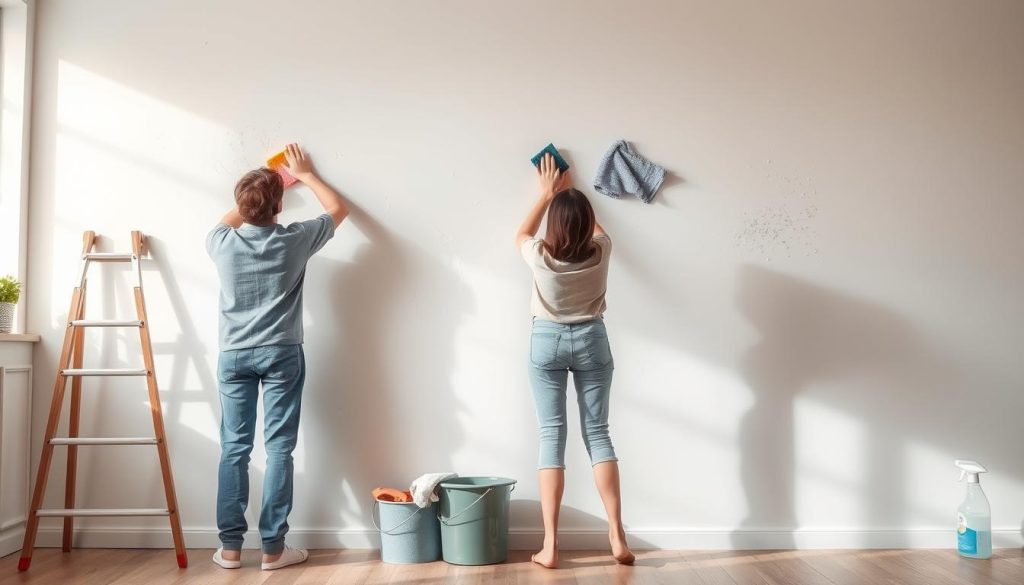
For deep cleaning painted walls, prepare a warm, soapy water solution with a mild detergent. Using a soft sponge, wring it out well to avoid oversaturation. This method ensures you clean thoroughly without damaging the paint or leaving water streaks. After applying the soapy water, remember to rinse the sponge frequently.
When facing stubborn stains such as water marks, crayon marks, or grease spots, consider employing specific cleaning techniques. A paste made of baking soda and water can effectively lift tougher stains, while a diluted vinegar solution works wonders on greasy areas. For areas with high traffic, where oil-based or high-gloss paints are used, stronger degreasers can be applied for deep cleaning painted walls.
It is essential to rinse the walls with clean water after using any cleaning solution. Follow this up by drying the surfaces with a clean cloth. This final touch not only enhances the shine but maintains the integrity of the paint.
| Stain Type | Recommended Cleaning Technique |
|---|---|
| Water Stains | Vinegar and water solution |
| Crayon Marks | Baking soda paste |
| Ink Stains | A mild detergent with warm water |
| Grease Spots | Stronger degreaser for oil-based paints |
By mastering these essential wall cleaning techniques, you can ensure your painted walls retain their beauty while combating various stains and maintaining their durability.
How to Properly Clean and Care for Painted Walls
Cleaning painted walls requires a methodical approach to maintain their appearance and longevity. Regular maintenance plays a crucial role in ensuring that your walls look fresh and inviting. Incorporate these practices into your routine for optimal results.
Regular Maintenance and Spot Cleaning
Incorporate cleaning painted walls into your monthly tasks. A simple yet effective method involves using a microfiber cloth to perform light dusting. Regular maintenance helps eliminate collected dust, which can dull the finish over time. Spot cleaning should not be overlooked either. Any marks, smudges, or stains should be tackled promptly to prevent permanent damage. Take a damp cloth and wipe down areas prone to handprints or scuff marks, such as near doorknobs and light switches.
Dusting and Removing Cobwebs
Through regular maintenance, you can keep your walls looking pristine. Begin by dusting walls using a soft cloth or a dust mop. Focus on corners and high areas where cobwebs tend to accumulate. Maintaining a habit of dusting walls not only enhances their appearance but also protects the paint by preventing the buildup of grime. After dusting, remember to check for spots needing attention, ensuring your walls remain a focal point of your home.
| Maintenance Task | Frequency | Tools Required |
|---|---|---|
| Dusting walls | Monthly | Microfiber cloth, dust mop |
| Spot cleaning | As needed | Damp cloth, cleaning solution |
| Full wall cleaning | Annually | Two buckets, sponges, cleaning detergent |
By implementing these simple tips, your walls will remain vibrant and welcoming throughout the year. Regular maintenance will save you time and effort in the long run, enhancing the overall look of your home.
Choosing the Right Wall Cleaning Products
Selecting appropriate wall cleaning products is crucial for maintaining the integrity of your painted walls. Different paint types require tailored solutions to prevent damage while ensuring effective cleaning. The following guidelines help you navigate the options for wall cleaners.
Best Cleaning Solutions for Different Paint Types
Understanding the type of paint on your walls informs the cleaning method you’ll employ. Here are some recommended solutions for various paint finishes:
| Paint Type | Recommended Cleaning Solution | Cleaning Ratio |
|---|---|---|
| Gloss or Semi-Gloss | All-Purpose Cleaner or Dishwashing Soap | 1 teaspoon per quart of warm water |
| Flat or Matte | Warm Water | Use with a sponge, avoiding harsh chemicals |
| Latex | All-Purpose Cleaner or Dishwashing Soap | 1 teaspoon per quart of warm water |
| Oil-Based | Dish Soap and White Vinegar | 1 teaspoon soap, 1/4 teaspoon vinegar per quart of warm water |
| Wallpapered | Gentle Dish Soap Solution | 1/2 cup soap per gallon of warm water; test in a small area |
Natural Alternatives for Wall Cleaning
If you prefer eco-friendly options, consider these natural alternatives for cleaning walls:
- Baking Soda Paste: Mix baking soda with water to form a paste for tackling stubborn stains.
- Vinegar Solutions: Combine equal parts of white vinegar and water for a safe cleaning mix.
- Mild Detergent: Use diluted mild detergent for regular maintenance, effective without harsh chemicals.
Choosing wall cleaners should reflect your environmental values while ensuring effective results. Regular cleaning, using selected products for each paint type, keeps walls looking pristine and prolongs their lifespan.
Effective Methods for Removing Wall Stains
Stains can accumulate on walls over time, making effective stain removal crucial for maintaining your home’s appearance. Prompt action helps prevent stains from setting, which can lead to tougher, more challenging cleaning scenarios. By understanding the common types of stains and the most suitable methods for removing wall stains, you can keep your painted surfaces looking fresh.
Quick Tips for Common Stains
Many wall stains arise from identifiable sources such as scuffed walls or food stains. Here are some effective quick tips for tackling these common stains:
- Crayon marks: Create a paste using baking soda and warm water. Apply gently to the stain and wipe clean.
- Oil-based stains: For shoe polish or grease stains, a microfiber cloth dampened with a suitable cleaner can help lift the stain.
- Water-based stains: Mix one part bleach with three parts water, apply to the stained area for 20 minutes, then wipe away with a clean cloth.
How to Handle Tough Stains
When facing tough stains like permanent marker, a few specialized cleaning solutions can aid in effective stain removal:
- Permanent markers: Rubbing alcohol or hairspray can work wonders. Spray it on the stain, wait a moment, and wipe clean.
- Mold and mildew: Utilize a vinegar and water mixture, applying it to the affected area. Be sure to wear safety gear when dealing with mold.
- Soot stains: A specially-designed sponge tailored for soot removal is advisable. Always wear protective gear and ensure proper ventilation while cleaning.
Taking a proactive approach to cleaning walls can also reduce the frequency of requiring professional cleaning services, which many households rely on to tackle stubborn issues. Regular maintenance of your walls ensures that removing wall stains becomes an easier task, keeping your living spaces neat and hygienic.
| Type of Stain | Common Causes | Recommended Cleaning Method |
|---|---|---|
| Scuff Marks | Furniture Bumps | Microfiber cloth with a cleaning solution |
| Oil-based stains | Shoe polish, Grease | Use a suitable oil-based stain remover |
| Water-based stains | Wine, Ketchup, Mustard | 1 part bleach to 3 parts water solution |
| Crayon Marks | Children’s Artwork | Baking soda & water paste |
| Mold | Humidity, Leaks | Vinegar & water solution |
By following these methods for effective stain removal, you’ll not only preserve the aesthetics of your walls but also maintain a healthy living environment. Regular upkeep makes a significant difference in reducing the occurrence and severity of wall stains.
Wall Cleaning Safety Tips
Prioritizing wall cleaning safety is essential during any wall maintenance task. When working near electrical outlets or in elevated areas, there are specific precautions to follow. Ensure that the electricity remains turned off while cleaning near switches. Ladder use requires caution, so make sure it stands on stable ground to prevent accidents.
Using appropriate protective gear enhances cleaning safety measures. Wearing gloves is advisable when handling cleaning solutions, as they safeguard your skin from potential irritants. Proper ventilation in your workspace is crucial; open windows or use fans to improve air circulation, minimizing exposure to fumes from cleaning products.
Before starting any cleaning procedure, take the time to assess the area for potential hazards like loose cables or fragile decor. Dotting your process with methodical approaches can further enhance wall cleaning safety. Stick to a routine that involves regular dusting and maintenance to limit the need for extensive cleaning, reducing risks associated with frequent heavy-duty cleaning efforts.
For those interested in maintaining a good paint job, it is recommended to clean your walls at least once a year. Products such as Dawn Platinum Liquid Dish Soap and BEHR SWIPES Interior Wall Wipes are practical choices for daily tasks. With costs for cleaning materials being quite reasonable, you can keep your walls looking pristine without a significant investment. You can find more details about average painting costs and factors influencing those costs at this resource.
Wall Cleaning Tools You Need
Having the right wall cleaning tools is essential for maintaining the cleanliness and appearance of your walls. Using appropriate cleaning supplies will allow you to tackle dirt, stains, and marks effectively. Both store-bought options and DIY cleaning tools are valuable in your cleaning arsenal.
Essential Cleaning Supplies
For everyday wall maintenance, essential cleaning supplies include:
- Microfiber cloths for gentle cleaning
- Sponges, including melamine sponges for tough marks
- Buckets to mix cleaning solutions
- A vacuum with a soft brush attachment for dust and cobwebs
- Lint-free cloths to avoid streaks
A common all-purpose cleaning solution consists of one quart of warm water, one teaspoon of liquid detergent, and ¼ teaspoon white vinegar. This mixture works well on various painted surfaces. For shiny finishes, such as those found in high traffic areas like kitchens and bathrooms, consider using a mild dishwashing liquid soap for regular upkeep.
DIY Tools for Efficient Cleaning
In addition to commercial cleaning supplies, you can create DIY cleaning tools to enhance your cleaning routine:
- Old toothbrushes can access tight spaces and remove grime effectively.
- Homemade cleaning solutions using vinegar and water are particularly effective for wallpaper with a vinyl finish.
- Creating a paste with baking soda can help tackle stubborn stains.
Utilizing both commercial and DIY cleaning tools can make wall maintenance easier while ensuring better results. Regular cleaning can effectively prevent the buildup of dirt and stains, helping to maintain the beauty and longevity of your walls.
Preparing Walls Before Painting
Prior to embarking on a painting project, proper wall preparation is essential to achieve the best results. Ensuring that you conduct thorough wall cleaning before painting will significantly enhance paint adhesion and the overall look of the finished job. In this section, we will cover the importance of cleaning and the steps involved in preparing walls effectively.
Importance of Cleaning Before Painting
Wall cleaning before painting serves multiple purposes. It eliminates dirt, dust, and grease buildup that can hinder paint adherence. Properly prepared walls lead to a more uniform finish, enhancing the durability of the paint job. This preparation is particularly crucial for surfaces like fresh plaster or brick, which require specific approaches to ensure even coverage. Skipping this step can result in peeling or uneven color, ultimately leading to the need for repaints sooner than expected.
Steps for Proper Wall Preparation
To ensure a successful painting job, follow these steps:
- Dust the walls using a dust cloth or vacuum to remove loose debris.
- Prepare a solution of lukewarm water and mild soap for washing the walls.
- Use a sponge to apply the solution, focusing on stains and high-traffic areas.
- Rinse with a clean sponge dipped in plain water to remove any soap residue.
- Allow the walls to dry completely before proceeding with painting.
- If needed, use sugar soap for tough stains, following manufacturer instructions.
- Fill any cracks or holes with a mixture of gap filler and water, sandingsmooth after drying.
- Consider applying a primer if necessary, based on the wall type (e.g., dilute paint for mist coats).
Ensuring that you accurately prepare walls for painting not only enhances the finished look but also prolongs the life of your paint job. By following these steps for wall preparation, you can achieve a beautiful and lasting paint application.
| Wall Type | Preparation Steps |
|---|---|
| Fresh Plaster | Wash with mild soap, rinse, and apply primer diluted by 30%. |
| Gloss or High Sheen | Sand thoroughly, clean, and ensure no dust remains. |
| Brick Walls | Clean with soap and water, apply mist coat diluted by 70%, or use a primer sealer. |
| After Wallpaper Removal | Use a stripping knife, sand lightly, and clean the surface. |
By adhering to these methods of preparing walls for painting, you set the foundation for a professional-quality finish.
Extending the Longevity of Your Painted Walls
Taking proactive measures will significantly aid in extending paint longevity on your walls. Begin by establishing a regular cleaning schedule that suits your household’s lifestyle and environmental factors. For example, if you live in an urban area, plan to clean your walls every two to four months to maintain paint life preservation effectively.
Encouraging family members to avoid unnecessary contact with walls can prevent unsightly marks and damage. You should account for specific situations as well; households with smokers or avid cooks may benefit from cleaning walls once a month. Pets and children will also necessitate more frequent maintenance, adjusting the schedule accordingly.
The type of paint on your walls impacts how often you should clean them. For instance, flat paint is less durable and requires more frequent cleaning than semi-gloss or gloss variants. Generally, a good rule of thumb is to clean walls every six to twelve months, depending on the finish.
Using the right cleaning solutions is essential. Water-based cleaners are an environmentally friendly option, while solvent-based cleaners effectively tackle stubborn stains and dirt. Microfiber cloths are recommended as they are excellent at attracting and trapping dust, ensuring minimal moisture damage while making the cleaning process efficient.
Here’s a summary of effective wall cleaning strategies:
| Situation | Cleaning Frequency |
|---|---|
| Normal Household | 1-2 times a year |
| Families with Allergies | Every few months |
| Urban Living | Every 2-4 months |
| Smokers or Cooks | Once a month |
| Active Households (Pets/Children) | Monthly |
For more information on maintaining your walls, refer to this helpful resource. Taking these preventative measures not only enhances the aesthetic quality of your home but also contributes to paint life preservation, ensuring that your walls remain vibrant and well-maintained for years to come.
Conclusion
Maintaining and caring for painted walls is essential for preserving their beauty and longevity. By understanding the types and finishes of paint, employing effective wall care tips, and using the right products, you can keep your walls looking fresh and new. It’s crucial to remember that regular maintenance not only enhances aesthetic appeal but also protects against wear and tear.
Utilizing gentle cleaning methods and avoiding harsh chemicals will help in preserving wall quality. For example, consider specific cleaning solutions tailored for different stains and remember to use soft sponges or microfiber cloths to avoid scratching. Employing techniques like the “Two-Bucket Technique” can streamline your cleaning process, making it more efficient and effective.
If you encounter challenges or need assistance with painting or wall care, don’t hesitate to reach out. For expert painting services that ensure your residential or commercial property shines, call now at 0466 344 447 and explore professional solutions in Geelong.
FAQ
How often should I clean my painted walls?
It is recommended to clean your painted walls monthly and address specific stains immediately to maintain their appearance and extend their longevity.
What is the best way to clean flat paint finishes?
For flat finishes, use a soft cloth or sponge with a mild soapy water solution, and avoid scrubbing too hard to prevent damage.
Can I use vinegar on my painted walls?
Yes, white vinegar can be an effective cleaning solution for tougher stains on oil-based paint finishes, but it should be diluted with water to avoid damage.
What tools do I need for washing walls?
Essential tools include microfiber cloths, sponges, buckets, a vacuum with a brush attachment, and melamine sponges for tougher marks.
How can I remove crayon marks from walls?
To remove crayon marks, apply a baking soda paste or use a melamine sponge with gentle scrubbing to avoid damage while effectively lifting the stain.
Is it safe to clean walls near electrical outlets?
Yes, but ensure the electricity is turned off in the area you are cleaning. Always use caution and avoid getting moisture in electrical sockets.
How do I prepare my walls before painting?
Clean the walls thoroughly to remove dust, dirt, and grease. Use a damp sponge followed by drying the surface to ensure proper paint adhesion.
Are there eco-friendly options for cleaning my walls?
Yes, natural alternatives like baking soda paste and vinegar solutions provide effective cleaning without harsh chemicals, making them environmentally friendly options.